Artistic Innovation and Technique

Bella Feldman was a true innovator in her sculptural practice, renowned for her groundbreaking and visually striking use of diverse materials throughout her career. From her early explorations with fiberglass to her signature combination of industrial steel and blown glass, she consistently pushed the boundaries of traditional sculpture.
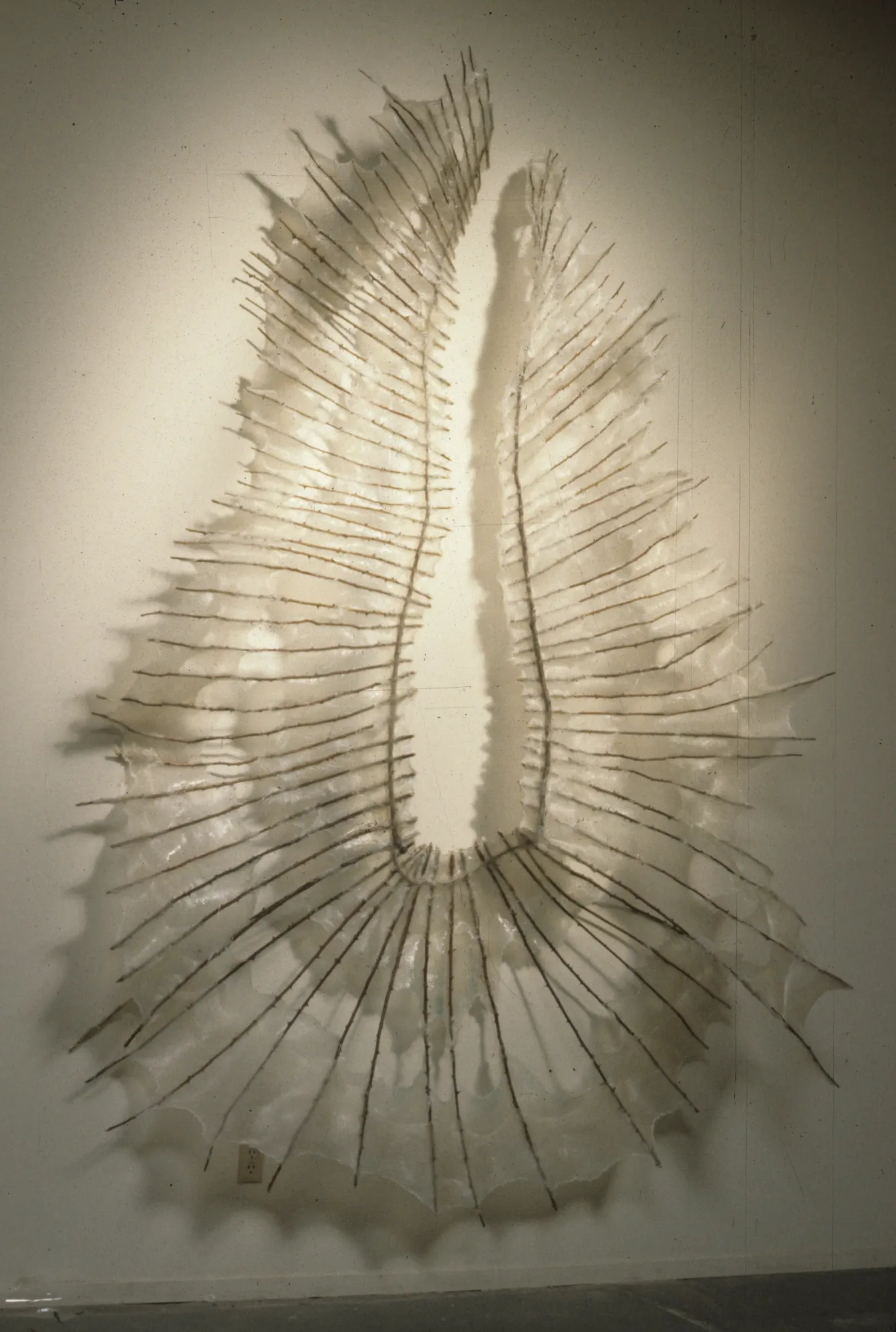
In the late 1970s, Feldman dedicated a significant period to working with fiberglass. This exploration allowed her to create layered, often translucent forms that possessed a unique lightness and ethereal quality. Her techniques in fiberglass involved layering the material to achieve varying degrees of opacity and to manipulate the way light interacted with the sculptures. These works often featured flowing, organic shapes, demonstrating her early interest in creating forms that seemed both fragile and resilient. This exploration of translucency and layered form can be seen as a precursor to the delicate nature of the glass she would later incorporate into her steel structures.

Cilia 2 from Flasks of Fiction series, made from fiberglass and resin. 
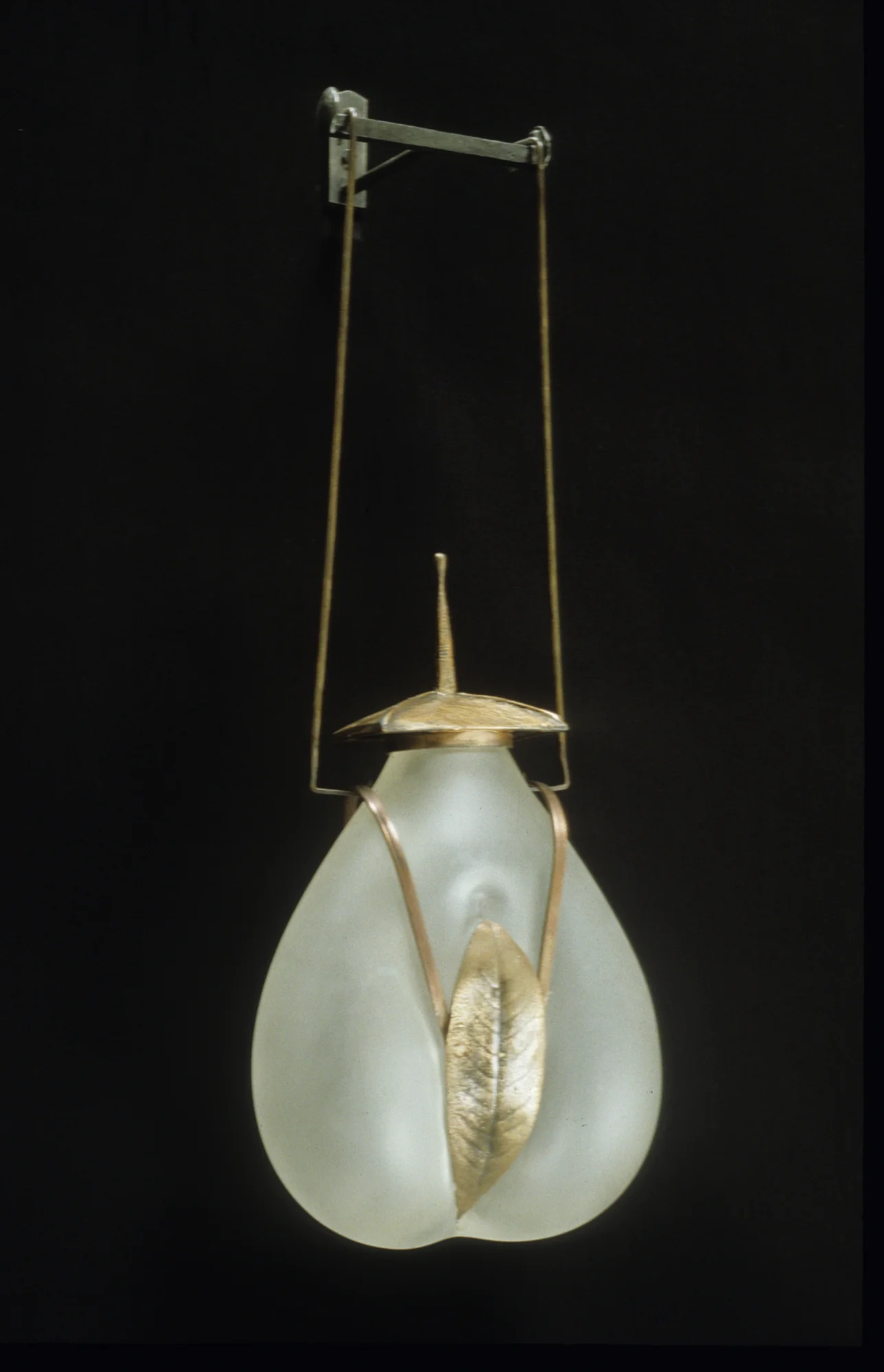
Temple from Flasks of Fiction series, made from glass, bronze & steel.

Later, Feldman became most recognized for her dynamic and often precarious juxtaposition of robust steel structures with delicate, often brightly colored or translucent blown glass elements. This wasn't simply a matter of placing two disparate materials side-by-side; she often integrated them in profound ways. In her Flasks of Fiction series, for example, she pioneered the process of blowing glass directly into and around intricate steel armatures. This resulted in a symbiotic relationship where the molten glass conformed to the constraints of the metal, creating forms that were both supported and seemingly contained. This technique highlighted the inherent tension between the fluid and the fixed, the fragile and the strong.

The visual language that emerged from Feldman's technical innovations is equally distinctive. Her forms often balanced organic, biomorphic shapes (particularly in the glass and earlier fiberglass) with the rigid geometry of the steel frameworks. This interplay created a sense of visual tension and dynamism. The use of color in her glasswork, ranging from vibrant hues to subtle translucence, added another layer of complexity and emotional resonance to her pieces.

.